



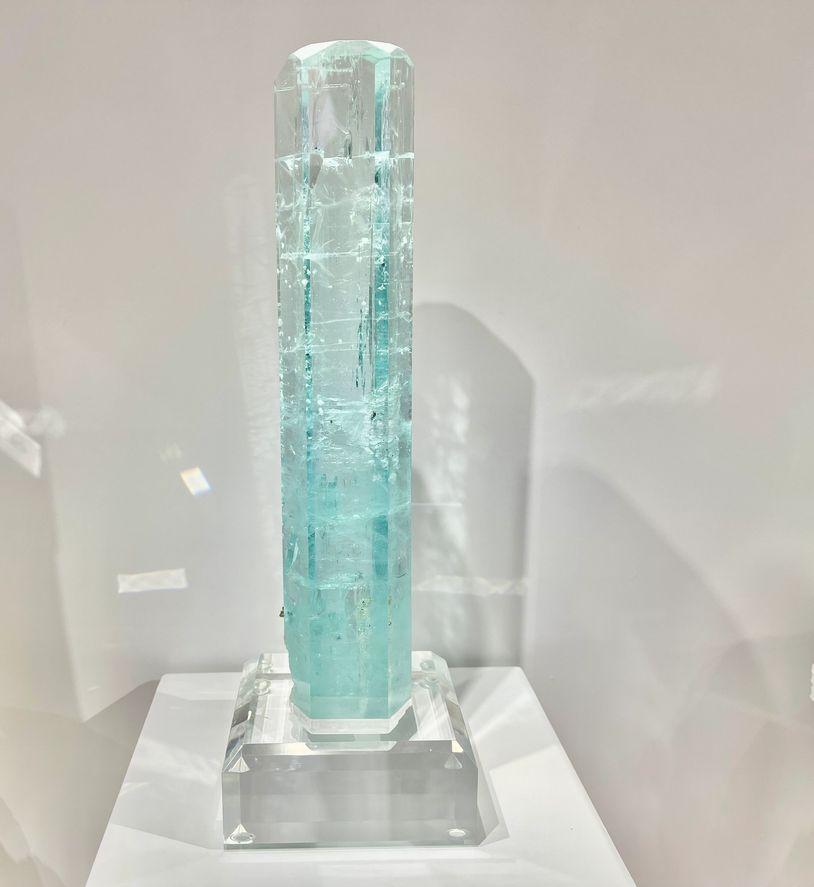

This magnificent aquamarine crystal possesses all the qualities of a world-class mineral specimen: glass-like transparency and luster, symmetrical crystal form with a perfect termination, stunning aquamarine blue color, and all these superlatives coming in a size seldom achieved in such a perfect crystal.
Beryls grow deep in the roots of mountains, associated with fluids injected upward from molten rock, growing in cavities in a type of rock called pegmatite. Pegmatite cavities are typically small (less than a meter in diameter), and prone to collapsing under the tectonic stresses of rising mountain chains, so finding a crystal with this degree of perfection is a very rare event. Not only does it have to have the right growing environment, but there also has to be just the right amount of erosion to get close to the surface for mining, but not so close as to be naturally eroded and destroyed by weathering.
The beryl family of minerals all have the same basic composition: a silicate of beryllium and aluminum. When trace amounts of atoms of other elements (iron, manganese, chromium or vanadium) replace either beryllium or aluminum in the crystal lattice it distorts it slightly, which in turn alters the way that light is transmitted through the mineral. These replacement ions are called chromophores, and the replacements produce an array of colors that differentiate the family members.
The blue of aquamarine results from the replacement of aluminum with iron; the vivid green of emeralds is the result of either chromium or vanadium replacing some of the aluminum; pink morganite results from an infusion of manganese replacing some of the beryllium, and green/yellow heliodor forms when iron replaces some aluminum. The rarest substitution, that of manganese for aluminum, produces the very rare varietal red beryl. Poor old colorless Goshenite represents beryl that was unable to attract any chromophores as it grew.




Reviews
There are no reviews yet.